How Artificial Intelligence Is Changing Online Jobs and Freelancing
Artificial Intelligence (AI) is no longer a futuristic concept—it is already reshaping how people work, earn, and build careers online. In 2026, AI has become deeply integrated into freelancing, remote jobs, and digital businesses. While many fear that AI will replace jobs, the reality is more balanced: AI is changing jobs, not eliminating opportunities altogether.
For freelancers and online workers, AI brings both challenges and powerful new possibilities. Those who understand how to adapt can earn more, work faster, and stay competitive in a rapidly evolving digital economy.
Understanding AI’s Role in Online Work
Artificial Intelligence refers to systems and tools that can perform tasks that normally require human intelligence, such as writing, analyzing data, designing visuals, or automating workflows.
In online jobs, AI is mainly used to:
Increase productivity
Automate repetitive tasks
Improve accuracy and speed
Reduce manual effort
Rather than replacing skilled professionals, AI acts as a support tool for those who know how to use it effectively.
1. How AI Is Transforming Freelancing
Freelancing has changed dramatically with the rise of AI-powered tools.
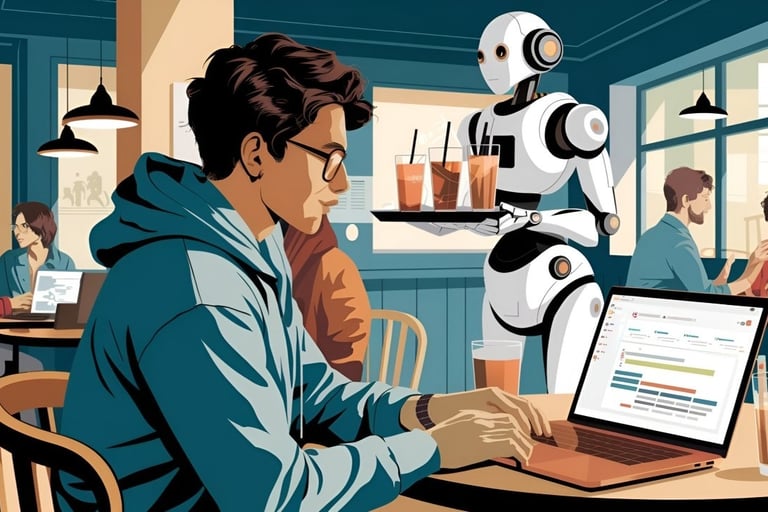


Key changes in freelancing:
Faster project delivery
Higher client expectations
Increased competition
New skill requirements
Freelancers who use AI tools can complete tasks in less time, allowing them to take on more projects or charge higher rates.
2. New Online Job Opportunities Created by AI
While some traditional tasks are declining, AI has created entirely new job roles.
Popular AI-driven online roles:
AI content editor
Prompt engineer
Automation consultant
AI tool specialist
Data analyst
AI-assisted digital marketer
These roles did not exist a few years ago and are now in high demand across freelancing platforms.
3. Online Jobs Most Affected by AI
AI is reducing demand for repetitive, low-skill tasks, such as:
Basic data entry
Simple content rewriting
Generic logo creation
Manual scheduling tasks
However, jobs that involve creativity, strategy, communication, and decision-making remain strong and continue to grow.
4. How Freelancers Can Use AI to Earn More
Instead of competing against AI, smart freelancers use it as an advantage.
Ways AI helps freelancers:
Writing drafts faster
Improving grammar and clarity
Generating design concepts
Automating social media posting
Analyzing data quickly
By combining human judgment with AI speed, freelancers can deliver higher-quality results in less time.
5. Skills You Need to Stay Relevant in the AI Era
To succeed in online work in 2026, focus on AI-complementary skills rather than fearing replacement.
Important skills include:
Critical thinking
Creative problem-solving
Communication skills
Strategic planning
AI tool literacy
Learning how to use AI tools effectively is now as important as learning basic computer skills once was.
6. AI and Remote Jobs
Remote companies increasingly expect employees to:
Use AI tools for efficiency
Handle multiple responsibilities
Adapt quickly to new software
Workers who resist AI may struggle, while those who embrace it gain career stability and growth.
Common Myths About AI and Online Jobs
Many misconceptions stop people from taking action:
“AI will take all jobs” – false
“Only tech experts can use AI” – false
“AI makes humans useless” – false
In reality, AI rewards adaptability and learning, not fear.
Frequently Asked Questions (FAQs)
Will AI replace freelancers completely?
No. AI replaces tasks, not skilled professionals.
Should beginners learn AI tools?
Yes. Basic AI literacy is now essential for online work.
Can non-technical people benefit from AI?
Absolutely. Many AI tools are beginner-friendly.
Does AI reduce earning potential?
For those who adapt, AI often increases income.
Conclusion
Artificial Intelligence is changing online jobs and freelancing—but not in a negative way for those who are prepared. AI reduces repetitive work, increases efficiency, and creates new opportunities for skilled professionals.
The future of online work belongs to those who learn continuously, adapt quickly, and use AI as a partner rather than a threat. By embracing change, freelancers and remote workers can build stronger, more secure careers in the AI-driven world.